Search This Blog
Showing posts with label autosomal. Show all posts
Thursday, July 12, 2012
Werner Syndrome
Werner syndrome, also known as progeria of the adult, is the most common of the premature aging disorders. Werner syndrome is inherited as an autosomal recessive disorder of chromosome 8, meaning that a defective gene is inherited from each parent. The syndrome is estimated to occur in 1 in 1 million individuals. Higher incidences of Werner syndrome have been reported in Japan and Sardinia. It affects both males and females.
Symptoms
Werner syndrome may begin in adolescence, but most often it begins in the mid-30s. Up until symptoms begin, the individual has healthy normal development. Once the disease process begins, the individual's body begins to age faster than normal. This produces symptoms such as:
Wrinkling and sagging of the face
Decreasing muscle mass
Thin skin and loss of fat under the skin
Graying hair and hair loss
A high-pitched voice
Along with the physical appearance of aging, body organs and systems also begin to age. This produces diseases such as:
Cataracts (cloudy spots on the lens of the eye)
Osteoporosis (weakened bones)
Diabetes (type 2)
Rare cancers such as thyroid cancer, lymphoma, and sarcoma
Heart and artery disease
Premature menopause in females.
Diagnosis and treatment
Diagnosis of Werner syndrome is based on physical examination. The most striking symptom is that the individual appears to be much older than he/she really is. There are no specific laboratory tests for Werner syndrome. However, since diabetes may occur, the blood sugar level should be checked, and since artery disease may develop, cholesterol levels should be monitored, and treated if necessary. There is no cure or specific treatment for Werner syndrome.
Future research
Scientists have developed a strain of mice which have all the symptoms of Werner syndrome. They plan to use the mice in research to look at the relationship between aging and cancer, as well as gaining insight into the mechanisms at work in Werner syndrome.
source: click here
Saturday, June 23, 2012
Chediak-Higashi Syndrome
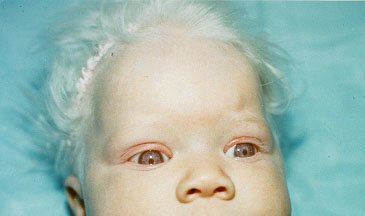
Chediak-Higashi syndrome (CHS) is characterized by partial oculocutaneous albinism (OCA), immunodeficiency, and a mild bleeding tendency. Approximately 85% of affected individuals develop the accelerated phase, a lymphoproliferative infiltration of the bone marrow and reticuloendothelial system. Adolescents and adults with atypical CHS and children with classic CHS who have successfully undergone allogenic hematopoietic stem cell transplantation (HSCT) develop neurologic findings during early adulthood.
Symptoms
Children with this condition may have:
* silver hair
* light colored eyes (albinism)
* jerky eye movements
* dicreased vision
* intellectual disability
* muscle weakness
* nerve problem in the limbs
* nosebleeds or easy bruising
* numbness
* tremor
* seizures
* sensitivity to light (photophobia)
Diagnosis
The diagnosis of Chediak-Higashi syndrome (CHS) should be considered in individuals with pigment dilution defects of the hair, skin, or eyes; congenital or transient neutropenia; immunodeficiency; and otherwise unexplained neurologic abnormalities or neurodegeneration. Each of these findings may be variably represented in affected individuals; therefore, heightened suspicion is needed to pursue an accurate diagnosis.
Treatment
There is no specific treatment for Chediak-Higashi syndrome. Bone marrow transplants appear to have been successful in several patients, especially when performed early in the disease.
Antibiotics are used to treat infections. Antiviral drugs such as acyclovir and chemotherapy drugs are often used in the accelerated phase of the disease. Surgery may be needed to drain abscesses in some cases.
source: sangga or click here
Wednesday, June 20, 2012
Patau Syndrome (Trisomy 13) Extra copy of chromosome 13
Patau syndrome, Trisomy 13, is the least common of the autosomal trisomies, after Down syndrome (Trisomy 21) and Edwards syndrome (Trisomy 18). The extra copy of chromosome 13 in Patau syndrome causes severe neurological and heart defects which make it difficult for infants to survive. The exact incidence of Patau syndrome is not known, although it appears to affect females more than males, most likely because male fetuses do not survive until birth. Patau syndrome, like Down syndrome, is associated with increased age of the mother. It may affect individuals of all ethnic backgrounds.
Newborns with Patau syndrome share common physical characteristics:
* Extra fingers or toes (polydactyly)
* Deformed feet, known as rocker-bottom feet
* Neurological problems such as small head (microcephaly), failure of the brain to divide into halves during gestation (holoprosencephaly), severe mental deficiency
* Facial defects such as small eyes (microphthalmia), absent or malformed nose, cleft lip and/or cleft palate
* Heart defects (80% of individuals)
* Kidney defects
Diagnosis
The symptoms of Patau syndrome are evident at birth. Patau syndrome may be mistaken for Edwards syndrome, so genetic testing should be done to confirm the diagnosis. Imaging studies such as computed tomography (CT) or magnetic resonance imaging (MRI) should be done to look for brain, heart, and kidney defects. An ultrasound of the heart (echocardiogram) should be done given the high frequency of heart defects associated with Patau syndrome.
Treatment
Treatment of Patau syndrome focuses on the particular physical problems with which each child is born. Many infants have difficulty surviving the first few days or weeks due to severe neurological problems or complex heart defects. Surgery may be necessary to repair heart defects or cleft lip and cleft palate. Physical, occupational, and speech therapy will help individuals with Patau syndrome reach their full developmental potential
source: sangga or click here
Subscribe to:
Posts (Atom)